
WEEE Compliance & Equipment Disposal
End-of-life copiers, printers and MFDs need certified disposal — not a skip. We can arrange collection, secure data wiping and routing through WEEE-compliant recycling partners, with the service and paperwork confirmed in your quotation. Equipment is refurbished where economically viable; otherwise, it is dismantled so its materials can be recycled.
Why “throw it in the skip” stopped being legal
The Waste Electrical and Electronic Equipment Regulations 2013 (the “WEEE Regs”, updated post-Brexit) make it a criminal offence to send commercial electronic equipment to general waste. Multifunction copiers and printers are explicitly covered — they’re WEEE Category 3 (IT and telecoms equipment).
Penalties under the regs go up to unlimited fines for serious cases. More relevant for most buyers: the Environment Agency publishes enforcement notices, and a non-compliance finding sits on your environmental record.
There’s also the data angle. Every MFD that’s been in service for more than a few weeks has documents on its hard drive — payroll runs, signed contracts, patient records, board papers. Sending one to a skip dealer with an un-wiped drive is a GDPR breach waiting to be discovered. ICO fines have reached £4 million for less.
The fix is straightforward: route the equipment through a certified disposal chain. That’s what we do.
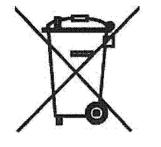
The crossed-out wheeled bin is marked on electrical equipment that must not go in general waste. It is a product marking, not a certification.
Symbol: WEEE Regulations 2013, Schedule 6. Contains public sector information licensed under the Open Government Licence v3.0.
“We take our responsibilities under the UK WEEE Regulations seriously and are committed to the responsible handling, recycling and disposal of electrical and electronic waste.”
The Importance of WEEE Compliance in the UK
The Waste Electrical and Electronic Equipment (WEEE) Regulations 2013 were established to reduce the amount of electronic waste sent to landfill. For the office equipment industry, this legislation governs how Multi-Function Devices (MFDs), photocopiers, and printers are handled once they reach the end of their functional life.
Proper adherence to these regulations is vital for protecting the environment and ensuring that the hazardous components found in complex office machinery are treated safely.
The Lifecycle of Photocopier Recycling
Unlike smaller household electronics, commercial MFDs are complex industrial machines that require a specialised decommissioning process to meet UK environmental standards.
I. Secure Data Destruction
Modern photocopiers and MFDs contain internal hard drives that store high-resolution images of every document processed. In accordance with GDPR and WEEE standards, the first stage of disposal must involve:
- Cryptographic Erasure — Overwriting the internal storage to ensure sensitive business data is unrecoverable.
- Physical Media Destruction — The shredding of hard disks where digital erasure is not sufficient.
II. Specialist Demanufacturing
A standard photocopier is composed of various materials that require separate waste streams:
- Precious Metals — Circuit boards (PCBs) contain gold, silver, and palladium which are recovered through specialised refining.
- Ferrous Metals — The structural steel chassis of the device is 100% recyclable.
- Polymers — High-impact plastics from the casing are sorted and pelletised for secondary manufacturing.
- Hazardous Consumables — Toner powder, fuser oils, and mercury-containing lamps (found in older scanners) must be isolated and treated as hazardous waste.
III. The Circular Economy & Resource Recovery
The goal of WEEE is to move away from a “linear” economy (take-make-dispose) toward a “circular” model. By correctly processing MFDs:
- Landfill Diversion — Over 95% of a modern photocopier’s weight can be recovered and diverted from landfill.
- Carbon Reduction — Recycling aluminium and steel consumes significantly less energy than mining and smelting virgin ores.
- Pollution Prevention — Professional handling prevents lead, cadmium, and other heavy metals from contaminating the water table.
Legal Requirements for UK Businesses
Under UK law, businesses have a “Duty of Care” regarding their waste. This includes:
- Authorised Treatment Facilities (AATFs) — Ensuring waste is only handled by facilities licensed by the Environment Agency.
- Documentation — Retaining Waste Transfer Notes (WTNs) for a minimum of two years to provide a clear audit trail of disposal.
- Hazardous Waste Records — Keeping specialised documentation for any components classified as hazardous.
The MFD Recycling Process
How we collect and route
Equipment disposal works the same whether you’re replacing a single device or decommissioning a multi-site fleet:
- Inventory. We confirm the device list — model, serial, site, age. For larger fleets, a site survey ahead of the collection date.
- Collection. UK-wide pick-up using our service vehicles or contracted logistics, depending on volume. Equipment is moved to a permitted treatment facility — never to general storage.
- Data wiping and certification. We can arrange equipment collection, secure data wiping and responsible disposal. The agreed service, wiping method, recycling paperwork, certification and any charges will be confirmed in a quotation. Data-destruction certificates are not supplied automatically.
- WEEE compliance paperwork. The waste documentation supplied for your collection is confirmed in your quotation.
- Onward route. Equipment is triaged: economically refurbishable units enter the refurbishment programme (more below); end-of-life units are broken down to component recyclate — metals, plastics, toner cartridges, electronics — each routed to the appropriate WEEE-certified processor.
The whole chain stays within UK jurisdiction. No export of e-waste to overseas processing.
Refurbishment as the better answer
A surprising proportion of “end-of-life” copiers aren’t actually end-of-life. They’re end-of-lease — financial events, not technical ones. A three-year-old e-STUDIO that’s been well-serviced has another four to six years of useful life in it.
We assess every collected unit. Devices that meet our refurbishment standard are stripped, deep-cleaned, fitted with replacements for any worn components, re-firmwared to the current release, and re-marketed through our refurbished programme. Refurbished e-STUDIOs carry the same five-year machine exchange guarantee as new units when supplied under a cost-per-page service agreement, with the same service contract options.
The carbon arithmetic is straightforward: manufacturing a new A3 MFP is roughly 1,600 kg CO2e. Refurbishing an existing one is roughly 80 kg. A refurb sale displaces a new build and avoids the manufacturing footprint — the strongest single circular-economy intervention in the office-equipment supply chain.
If your sustainability reporting tracks Scope 3 emissions, choosing refurbished over new is a measurable Scope 3 reduction. We can supply the supporting figures for your annual report.
Decommissioning equipment? Talk to us before the skip arrives.
We can collect, wipe and route your devices through a certified disposal chain, with the agreed service, paperwork and any charges confirmed in your quotation.